
Why an Extended Service Plan is Your Car’s Best Friend
What Is an Extended Service Plan (and Do You Actually Need One)?
An extended service plan is a service contract that covers the cost of specific mechanical repairs after your vehicle’s factory warranty runs out.
Here’s a quick breakdown:
| Question | Quick Answer |
|---|---|
| What is it? | A contract covering repair costs beyond the factory warranty |
| Who offers it? | Car manufacturers (OEM) and third-party companies |
| What does it cover? | Engine, transmission, electrical, brakes, A/C, and more |
| How much does it cost? | Roughly $900–$2,400 per year, or as low as $30/month |
| Is it worth it? | Often yes — especially for older vehicles or if you can’t absorb a large repair bill |
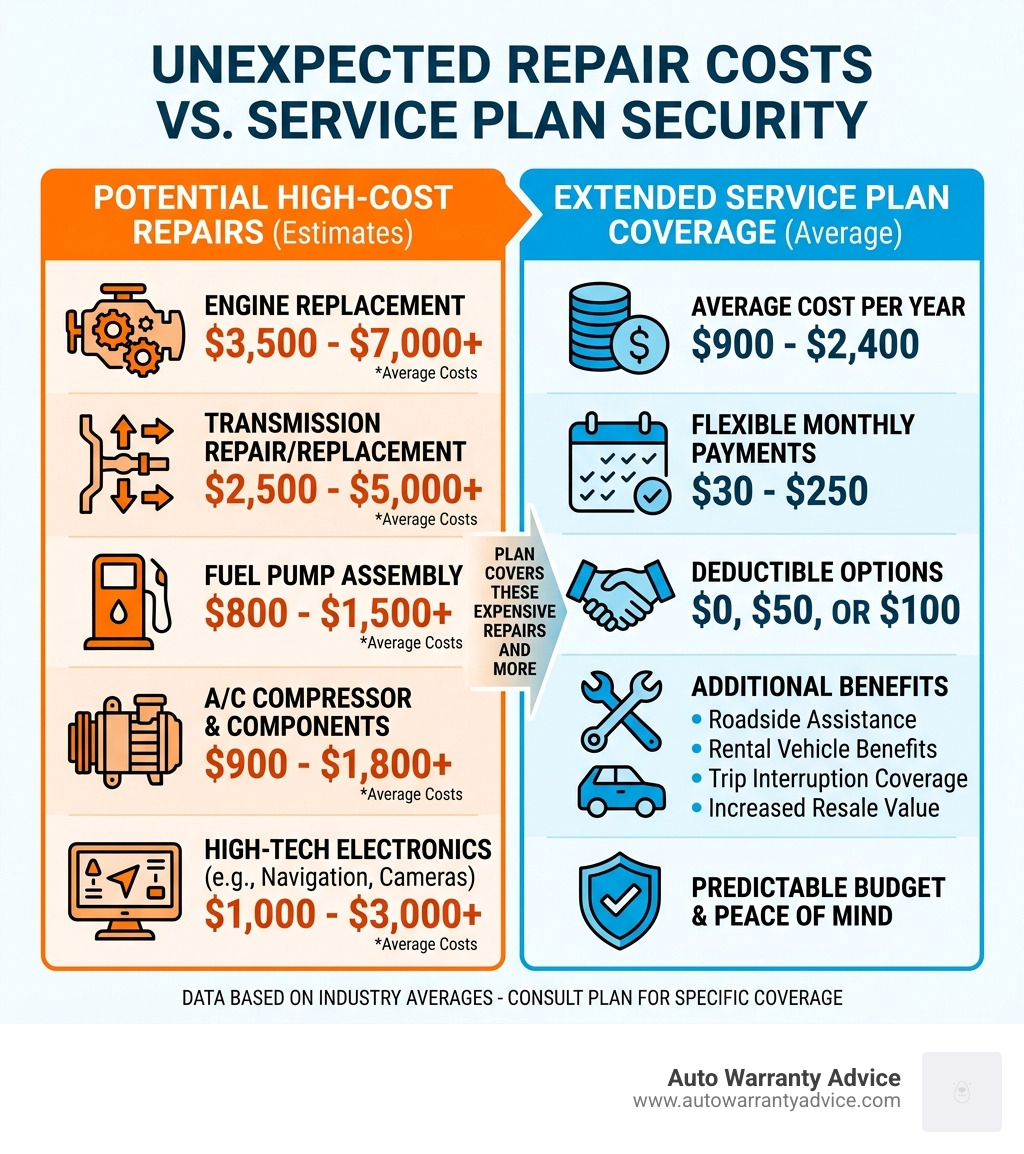
Car repairs are expensive. An engine replacement can run over $3,000. A timing chain repair can cost more than $1,600. A fuel pump alone can set you back nearly $1,000. These aren’t rare edge cases — they’re the kinds of bills that blindside car owners every day.
Your manufacturer’s warranty has an expiration date. Once it’s gone, every repair comes out of your pocket.
That’s exactly the gap an extended service plan is designed to fill.
In this guide, we’ll walk you through how these plans work, what they cover, what they cost, and how to choose one without getting burned.
Understanding the Extended Service Plan: Definition and Coverage

When we talk about an extended service plan, we are talking about a “vehicle service contract.” While many people use the term “extended warranty,” there is a technical difference. A warranty is included in the price of the product, while a service contract is an optional purchase that costs extra.
Think of it as a safety net. Modern vehicles are essentially computers on wheels. While engines are more efficient than ever, the complexity of the parts—from turbochargers to infotainment screens—means that when something breaks, it’s rarely a “quick fix.”
Coverage isn’t one-size-fits-all. Most providers offer tiered levels of protection so you can choose a plan that fits your budget and your vehicle’s needs.
| Coverage Tier | What it Covers | Best For |
|---|---|---|
| Powertrain | The “heart” of the car: Engine, transmission, drive axle. | High-mileage vehicles; budget-conscious owners. |
| Stated-Component | Specific list of parts: Steering, electrical, A/C, and brakes. | Mid-range vehicles with known common issues. |
| Comprehensive/Bumper-to-Bumper | Almost everything except specifically excluded “wear items.” | New or luxury vehicles with complex tech. |
Extended Service Plan vs. Manufacturer Warranty
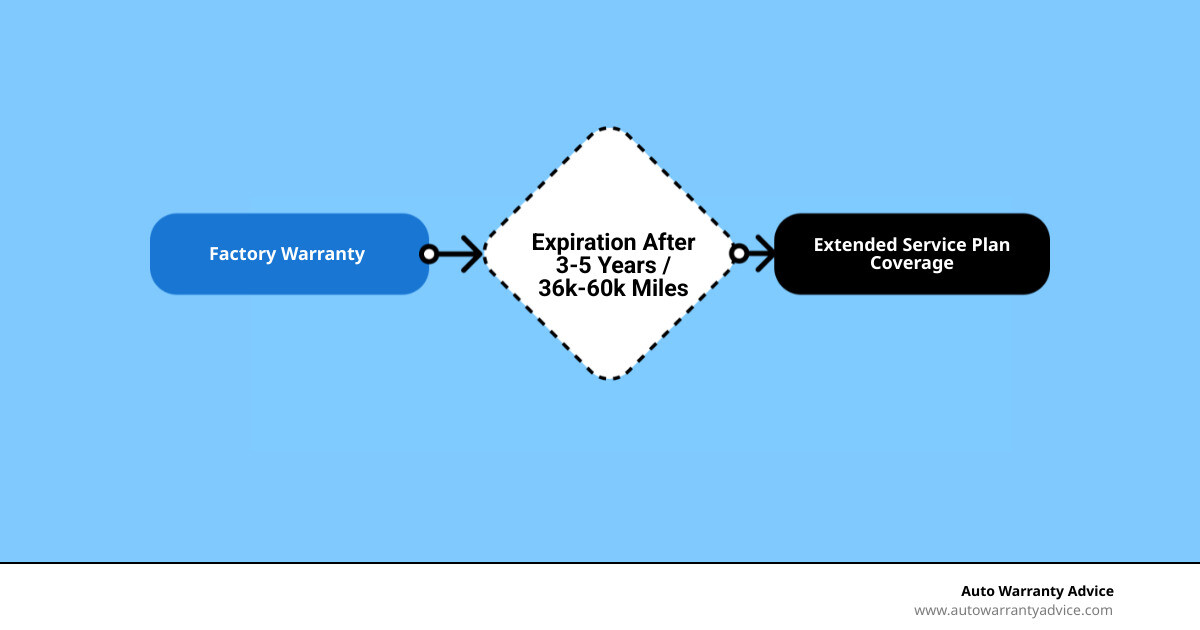
Every new car comes with a factory warranty. Usually, this is a 3-year/36,000-mile bumper-to-bumper warranty and a 5-year/60,000-mile powertrain warranty. Some brands, like Hyundai or Kia, offer longer terms, but eventually, they all expire.
The “coverage gap” occurs the moment you hit that mileage or age limit. If your transmission fails at 60,001 miles and you don’t have an extended service plan, you are responsible for the entire bill. These plans allow you to “extend” that peace of mind for several more years—sometimes up to 10 years or 175,000 miles, depending on the provider.
Common Coverage Tiers
As of April 2026, the industry has standardized several tiers of coverage. For example, some manufacturers offer plans that cover over 1,000 components, including high-tech features like rain-sensing wipers and SYNC systems. Others might offer a “Base” plan covering roughly 84 major components.
Typical systems covered include:
- Engine & Transmission: The most expensive parts to repair.
- Electrical: Alternators, starters, and wiring harnesses.
- High-Tech: Navigation systems, backup cameras, and blind-spot sensors.
- Climate Control: A/C compressors and heating components.
- Steering & Brakes: Power steering pumps and anti-lock brake systems (ABS).
For those looking for specific brand protection, programs like Added Security Extended Coverage | Subaru provide specialized plans tailored to the unique mechanical needs of all-wheel-drive systems.
The Financial Side: Costs and Benefits

Let’s talk numbers. The price of an extended service plan varies wildly based on what you’re driving and how much protection you want. On average in 2026, you can expect to pay between $900 and $2,400 per year. If you prefer a monthly payment, plans can range from a bare-bones $30 per month to a comprehensive $250 per month.
At Auto Warranty Advice, we often see consumers surprised by the “deductible” aspect. Just like health insurance, you might pay a small amount (usually $0, $50, or $100) per repair visit, and the plan covers the rest. Many providers now offer interest-free financing for up to 30 months to make the initial cost more manageable.
For more tailored insights on how to budget for these costs, you can find more info about warranty services on our main site.
Benefits of an Extended Service Plan
The primary benefit is financial protection against “sticker shock” at the mechanic. However, there are several “hidden” perks that often make these plans worth the investment:
- Roadside Assistance: Most plans include 24/7 help for flat tires, lockouts, and dead batteries.
- Rental Vehicle Benefits: If your car is in the shop overnight, many plans provide rental reimbursement for up to 10 days.
- Trip Interruption: If you break down far from home, some plans cover your lodging and meals while the car is being fixed.
- Resale Value: A transferable extended service plan is a huge selling point. It tells a potential buyer that the car has been well-maintained and is still protected.
Factors Influencing Price
Why does your neighbor pay less for their plan than you do? Several factors are at play:
- Vehicle Age and Mileage: Older cars with higher miles are “riskier” to cover, so the plans cost more.
- Reliability Ratings: If you drive a model known for frequent transmission issues, the plan price will reflect that.
- Coverage Level: A powertrain-only plan is significantly cheaper than a bumper-to-bumper plan.
- Deductible: Choosing a higher deductible usually lowers your monthly or upfront premium.
Navigating the Claims Process and Provider Options
One of the biggest hurdles for car owners is understanding how to actually use the plan they bought. We’ve all heard horror stories of claims being denied, but most issues arise from not following the proper steps.
How an Extended Service Plan Claims Process Works
The process is generally straightforward if you follow this sequence:
- Diagnosis: Take your vehicle to a licensed repair facility. Many plans allow you to choose from over 50,000 ASE-certified mechanics nationwide.
- Contact the Administrator: Before any work begins, the service manager at the shop must call your plan administrator. This is crucial. If you authorize the repair before the administrator approves it, they may deny the claim.
- Authorization: The administrator reviews the diagnosis against your contract. Once approved, they issue an authorization number.
- Repair & Payment: The shop performs the repair. In many cases, the administrator pays the shop directly via credit card, meaning you only pay your deductible.
Claim Requirements Checklist:
- Proof of routine maintenance (save those oil change receipts!).
- Current mileage reading.
- Detailed diagnosis from the mechanic.
- Prior authorization before work starts.
OEM vs. Third-Party Providers
You have two main choices: buying from the manufacturer (OEM) or an independent third-party company.
Manufacturer (OEM) Plans:
- Pros: Guaranteed genuine parts, factory-trained technicians, and seamless integration at the dealership.
- Cons: Often more expensive and must be purchased while the factory warranty is still active.
Third-Party Providers:
- Pros: Usually more affordable, more flexible mileage limits (some cover cars up to 300,000 miles), and you can choose almost any certified mechanic.
- Cons: Quality varies by company; some may use “like-kind” parts rather than brand-new factory parts.
Frequently Asked Questions
What is typically not covered by an extended service plan?
No plan covers everything. Even the most “comprehensive” contracts have exclusions. Generally, you are responsible for:
- Wear and Tear Items: Brake pads, windshield wipers, light bulbs, and tires.
- Routine Maintenance: Oil changes, fluid flushes, and spark plug replacements.
- Pre-existing Conditions: Problems the car had before you bought the plan.
- Accidental Damage: Issues caused by collisions, weather, or theft (that’s what car insurance is for).
Can I transfer my plan if I sell my vehicle?
In most cases, yes! This is one of the best ways to recoup the cost of the plan. When you sell your car privately, you can transfer the remaining coverage to the new owner for a small fee (usually around $50). This provides the buyer with immediate peace of mind and can justify a higher asking price.
How can I identify and avoid service plan scams?
We’ve all received those “We’ve been trying to reach you about your car’s extended warranty” robocalls. These are almost always scams or high-pressure marketing tactics. To stay safe:
- Never give personal info over the phone to an unsolicited caller.
- Check for a Money-Back Guarantee: Reputable providers usually offer a 30-day “look-back” period where you can get a full refund if you change your mind.
- Verify with the BBB: Look for companies with high ratings and a history of paying claims. Some top-tier providers have paid out over $300 million in claims over the last decade.
- Read the Contract: If a salesperson says “everything is covered,” but the contract lists exclusions, the contract is what matters.
Conclusion
At the end of the day, an extended service plan is about one thing: certainty. We live in an unpredictable world, and a $4,000 engine failure is enough to derail most families’ finances. While some people prefer to “self-insure” by putting money into a dedicated savings account, many find that the added benefits like roadside assistance and rental car coverage make a service plan the better value.
Whether you choose a factory-backed plan or a flexible third-party option, the key is to do your research early—ideally before your factory warranty expires.
If you’re ready to explore your options and protect your investment, visit our Homepage for more guides and expert advice on keeping your car on the road for years to come. Safe driving!
